The radio is one of the most anxiety-producing parts of student pilot training. New students freeze up, say the wrong thing, or key the mic and stay silent. But aviation radio communication follows predictable patterns — once you learn the templates, it becomes routine. This guide covers every standard call you'll make as a student pilot.
The golden rule: Who you're calling, who you are, where you are, what you want. Every radio call follows this structure. Internalize it and you'll never be lost for words.
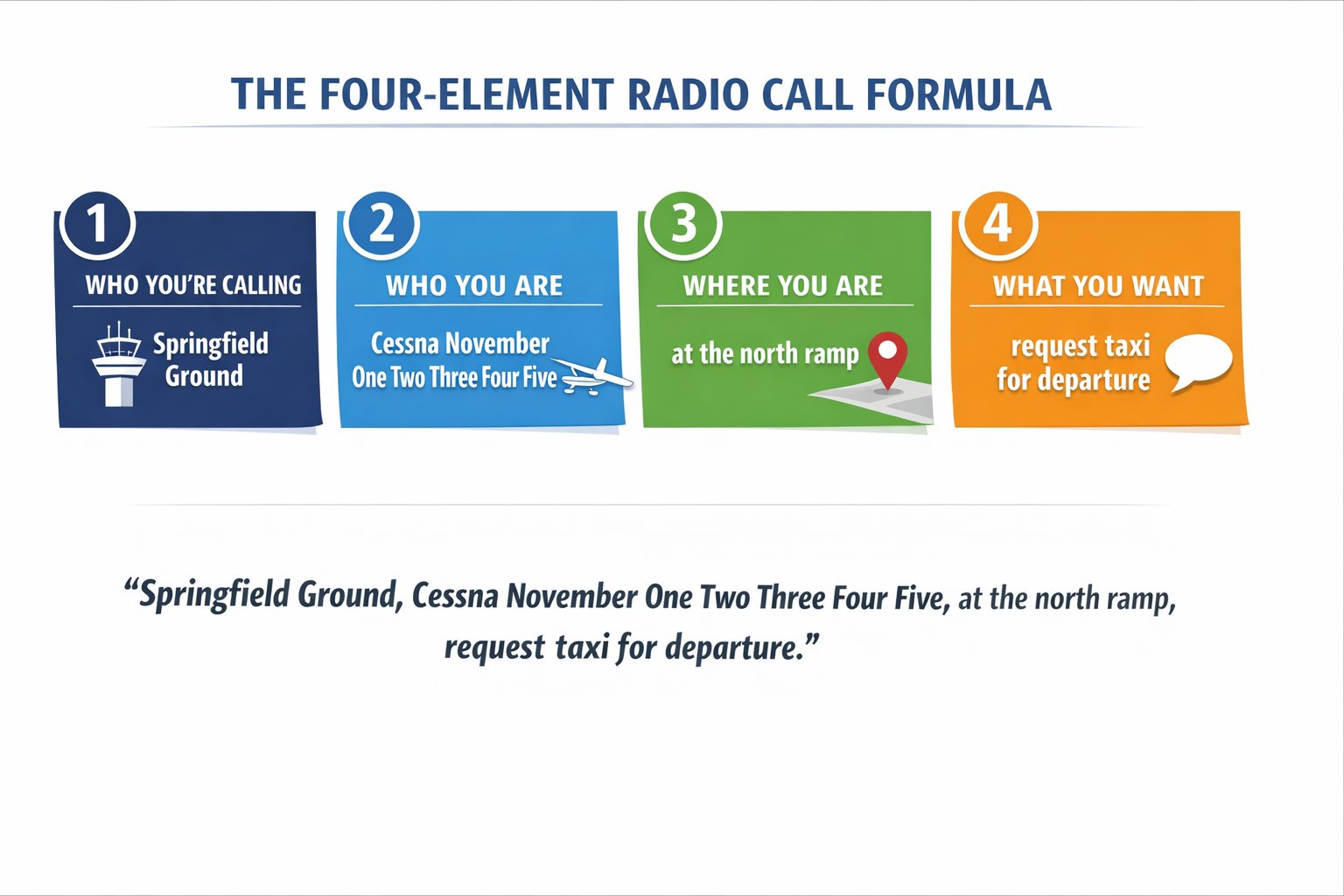
Every radio call has four parts — who, who, where, what
The phonetic alphabet
Every letter has a standard phonetic word used on the radio to avoid confusion between similar-sounding letters. Know these cold — your aircraft registration, runway designations, and clearances all use them.
64 free PPL ground school videos on YouTube. Also offers a premium interactive course at freepilottraining.net with 700+ practice questions and a written exam endorsement.
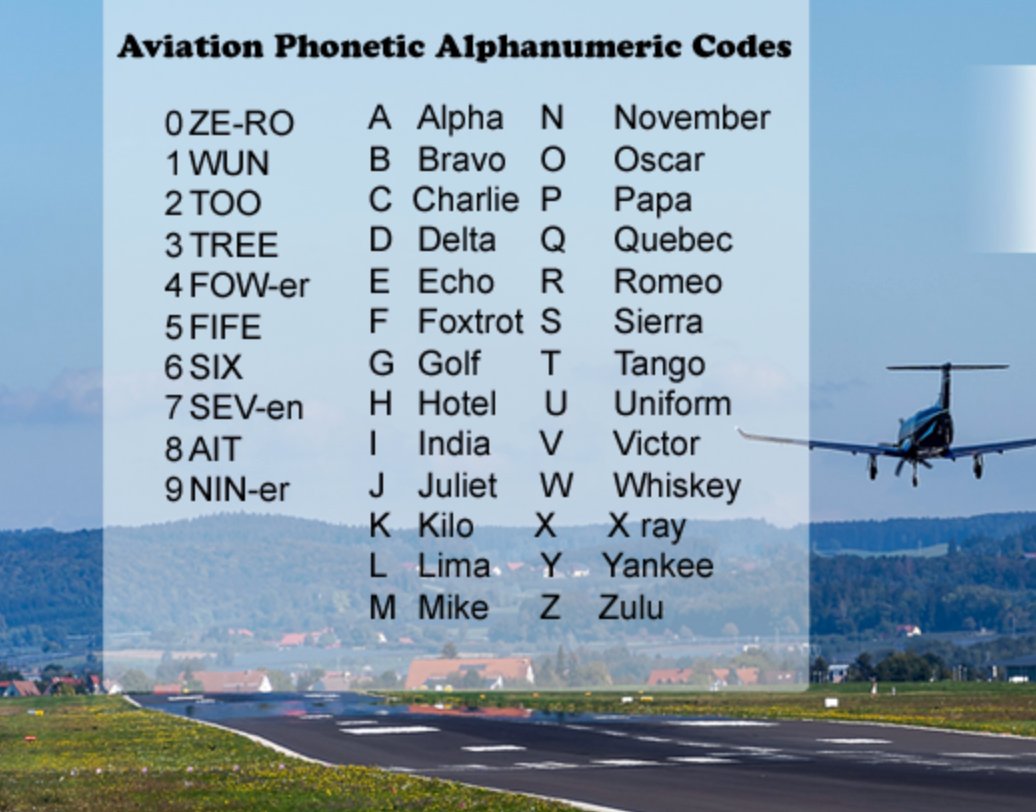
Aircraft registrations drop the "N" and use the last three characters phonetically for abbreviated calls after initial contact. N12345 becomes "November One Two Three Four Five" initially, then "Three Four Five" after ATC uses your abbreviated call sign.
Numbers and time
Numbers are spoken digit by digit: runway 27 is "two-seven," not "twenty-seven." Altitudes: 3,500 feet is "three thousand five hundred." Frequencies: 122.8 is "one-two-two-point-eight." Time is always Zulu (UTC) in aviation: 1430Z is "one-four-three-zero Zulu."
Non-towered airport calls (CTAF / UNICOM)
At non-towered airports, pilots self-announce on the Common Traffic Advisory Frequency (CTAF) — typically 122.8 or another frequency shown on the sectional chart. There is no ATC to respond; you're informing other traffic of your position and intentions.
Inbound call — 10 miles out
Entering the pattern
Pattern position calls
"[Airport name] Traffic, Cessna Three Four Five, final, runway [number], full stop, [Airport name]."
Departing the pattern
Class D towered airport calls
At Class D airports, you communicate with the control tower. The tower gives instructions — you read them back correctly.